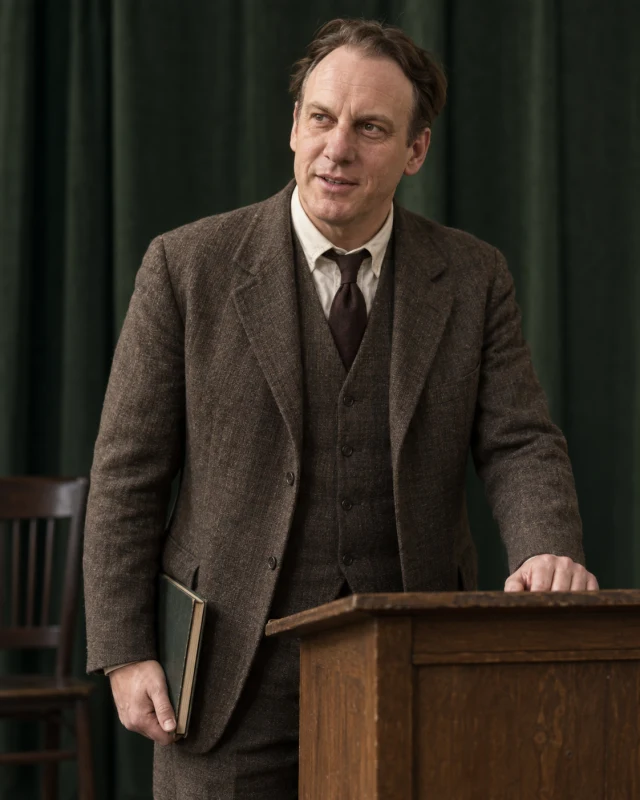
Vachel Lindsay Reads "Adventures While Preaching the Gospel of Beauty" — In His Own Restored Voice
Source recording: January 1931, Columbia University - about five hours on thirty-eight aluminium Speak-o-Phone discs cut by W. Cabell Greet. No commercial Lindsay record was ever made; the labels turned him down. Held by: Columbia University; NCTE distributed dubs to schools on subscription; a subset was later issued on a Caedmon LP (now HarperCollins) and digitised for… Copyright: still under copyright or held under archive terms — see Voice Rights.
“I came to think of myself as the carrier of the Gospel of Beauty.”
About this work
Adventures While Preaching the Gospel of Beauty (1914) is Lindsay's prose chronicle of his 1912 walking tour, setting out from Springfield, Illinois and tramping westward through Missouri and Kansas with almost no money, exchanging his rhymes for hospitality. It is part travelogue, part manifesto, and part self-portrait of a poet determined to carry beauty on foot to the American heartland.
Hearing this account in Lindsay's own restored voice is uniquely fitting: he believed poetry lived in performance, not on the page. To listen is to walk the dusty roads beside the very man who chanted his verses to strangers' kitchens — the artist as itinerant evangelist of beauty.
Who was Vachel Lindsay?
Nicholas Vachel Lindsay (1879–1931) was an American poet from Springfield, Illinois, often called the father of modern "singing poetry" — verse meant to be chanted and performed aloud. His thunderous recitals of poems like The Congo and General William Booth Enters into Heaven made him one of the most electrifying live performers American poetry has ever produced.
Before fame, Lindsay was a self-styled wandering troubadour. He set out on foot across the United States in 1906, 1908, and 1912, trading printed poems for meals and lodging and preaching what he called the "Gospel of Beauty" — a vision of art woven into ordinary American life. His career ended in tragedy when he died by his own hand in 1931, only months after recording his voice for posterity.
About the voice
This recording restores Vachel Lindsay's voice from his real archival recordings. In 1931, only months before his death, Lindsay recorded his poems for William Cabell Greet's Contemporary Poets series — the only surviving recordings of his actual voice reciting his work. We use those genuine recordings to restore his voice for this text; it is a reconstruction, not a live performance, and we never claim it is Lindsay speaking today.
Provenance: Restored from real recordings. We label every voice honestly — restored, narrated, or disputed.
Questions
What did Vachel Lindsay sound like?
Lindsay was a riveting performer with a rhythmic, chanting, almost preacherly delivery that swelled and dropped like song. The 1931 Greet recordings preserve that distinctive cadence — the only surviving documentation of his actual voice reciting his work.
Is this really Lindsay's voice?
It is a restoration built from his genuine 1931 archival recordings, applied to the text of this book. It aims to be true to how he actually sounded. It is not a new recording made by Lindsay, and we never claim it is him speaking today.
Is "Adventures While Preaching the Gospel of Beauty" in the public domain?
Yes. The book was published in 1914 and is in the public domain — it is freely available through archives such as Project Gutenberg — which is why we can offer this audiobook edition.
More iconic voices
Discover more voices
Get free sample recommendations and news about new releases. Unsubscribe at any time.