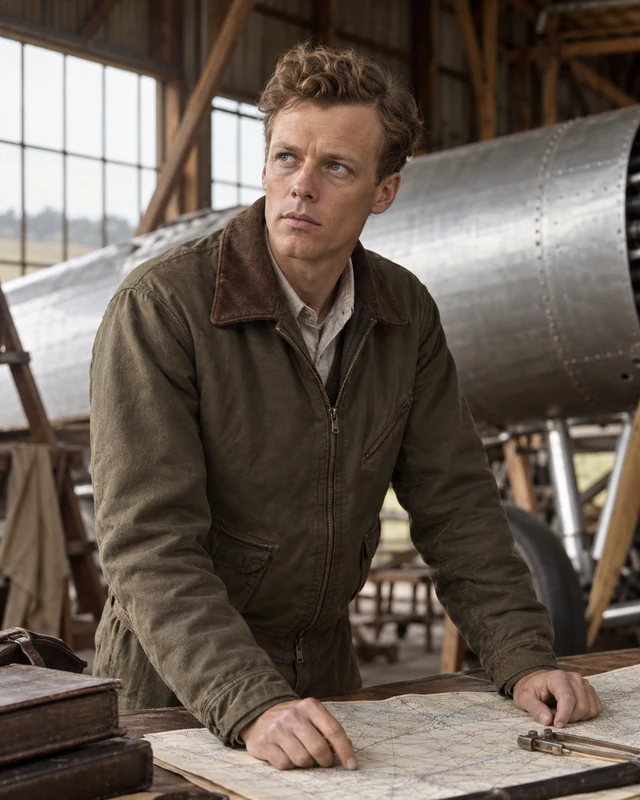
Charles Lindbergh Reads "We" — In His Own Restored Voice
Source recording: 11 Jun 1927, Washington DC reception - NBC network broadcast coverage (National Recording Registry, 2004); the same day, Victor masters CVE-38286 and CVE-38290 to 38293 and Columbia W144380 (3 of 6 Victor masters issued); 13 Jun 1927, New York City Hall via a… Held by: Sony Music (Victor/Columbia); NBCUniversal; Library of Congress Motion Picture, Broadcasting and Recorded Sound Division; Yale (Lindbergh Papers); Min… Copyright: still under copyright or held under archive terms — see Voice Rights.
“Science, freedom, beauty, adventure: what more could you ask of life?”
About this work
"We" (1927) is Lindbergh's own firsthand account of his life as a pilot and of the transatlantic flight that made history, published by G. P. Putnam's Sons just weeks after he landed in Paris. Written in a matter of weeks, it became one of the fastest-selling nonfiction books of its era, with hundreds of thousands of copies in print within the first year.
Hearing "We" in Lindbergh's own restored voice closes the distance between reader and aviator. This is the man himself describing the fight against sleep, the fog, and the empty hours over open water — the story told the way only the person who lived it could tell it.
Who was Charles Lindbergh?
Charles Augustus Lindbergh (1902–1974) was an American aviator who became one of the most famous people on Earth overnight. On May 20–21, 1927, the 25-year-old airmail pilot flew the single-engine monoplane Spirit of St. Louis alone and nonstop from Long Island to Paris — roughly 3,600 miles across the Atlantic in about 33½ hours — winning the Orteig Prize and igniting a worldwide mania for flight.
The flight transformed a quiet Midwesterner into a global symbol of nerve and engineering daring. Lindbergh's later life ran through triumph and tragedy alike — the 1932 kidnapping and murder of his infant son, bitter prewar political controversy, and decades of conservation and aviation advocacy. But it is the lone voice of the young flier, recounting the silence and danger above the ocean, that still grips listeners.
About the voice
This recording restores Charles Lindbergh's voice from his real archival recordings — the newsreel interviews, radio addresses, and public speeches captured during his lifetime — to narrate the text of "We". It is a reconstruction built from genuine documentation of how Lindbergh actually sounded; it is not a live performance, and it does not claim to be Lindbergh speaking today.
Provenance: Restored from real recordings. We label every voice honestly — restored, narrated, or disputed.
Questions
What did Charles Lindbergh sound like?
Lindbergh had a measured, plainspoken Midwestern American voice — unhurried and understated, more engineer than orator. He was recorded many times in newsreels, radio addresses, and speeches, which is what makes a faithful restoration of his voice possible.
Is this really Lindbergh's voice?
It is a restoration built from his genuine archival recordings, used to narrate the text of "We." It is designed to be true to how he actually sounded. It is not a new live recording of Lindbergh, and we never claim it is him speaking today.
Is "We" in the public domain?
Yes. "We" was published in 1927, placing it in the United States public domain, which is why we are able to offer this audiobook edition of the text.
More iconic voices
Discover more voices
Get free sample recommendations and news about new releases. Unsubscribe at any time.